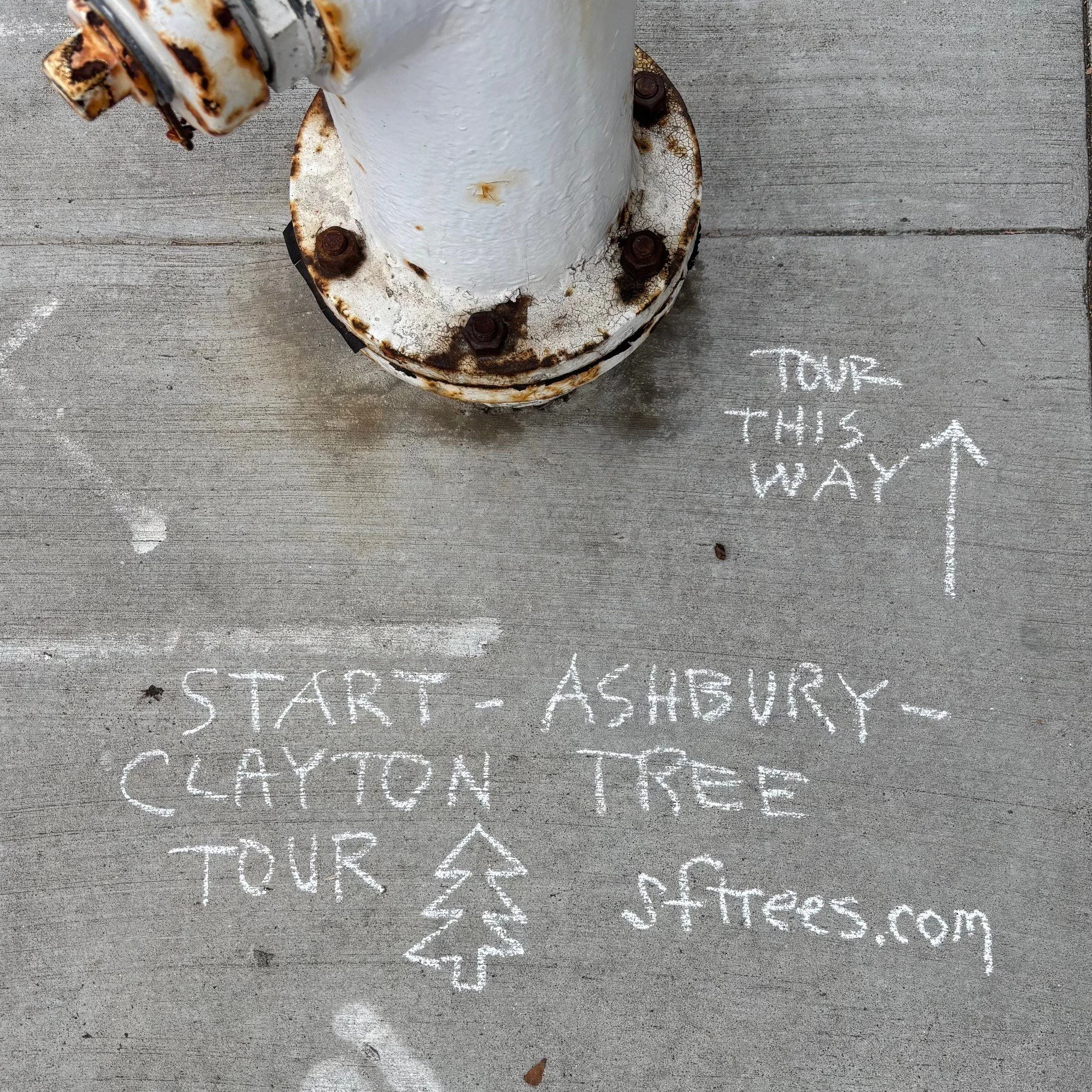
Ashbury-Clayton Tree Tour (12-14-25)
Near the geographic center of San Francisco lies an elevated residential neighborhood notable for its elegant architecture, quirky front gardens and oodles of trees lining its streets. Call it Ashbury Heights or Upper Ashbury or Mount Olympus, it offered a tree-filled walk on an uncommonly chilly December morning, with tule fog dimming the sunlight. Thank goodness for the hot chocolate of Bacon Bacon.
This tree walk is a simple loop: downhill on Ashbury Street and uphill on Clayton Street. It begins on the NE corner of Clayton and 17th streets, with the first tree a few yards north of 17th on Clayton. The walk bears gently right onto Ashbury and down Ashbury to Frederick Street. At Frederick, it turns left (west), passing the tasty Bacon Bacon cafe (good spot for a hot chocolate on a chilly morning like this one). At Clayton, the walk turns left (south) and heads uphill, almost to the intersection of Ashbury. This walk is barely 1 ½ miles long, with a gentle downhill for the first half and a gentle uphill for the remainder.
Numbered trees are labeled with common and scientific names and country of origin, all written in white chalk on the sidewalk; accompanying numbers, in blue, run from 1 to 40. White arrows on the pavement provide directions whenever a turn is needed.
Clayton Street, 17th to Ashbury, east side
1. 1180 Clayton Silk oak (Grevillea robusta), E Australia (known for their bright yellow orange flowers in late spring in areas with a warmer climate, this tree seldom flowers due to the chill of the city)
2. 1154 Clayton Water gum (Tristaniopsis laurina), E Australia (this tree grows in stream-side locations in the wild, hence the common name; SF’s most commonly planted street tree)
3. 1128 Clayton Red-flowering gum (Corymbia ficifolia), SW Australia (produces bright red, orange, or pink flowers in summer; among the best and showiest of trees in SF’s urban forest
4. 1081 Ashbury Incense cedar (Calocedrus decurrens), CA native; W Oregon to N Baja (tree is across the street; the wood was used in construction and for making pencils)
***Cross Ashbury carefully at Downey Street; there is no stop sign for traffic on Ashbury***
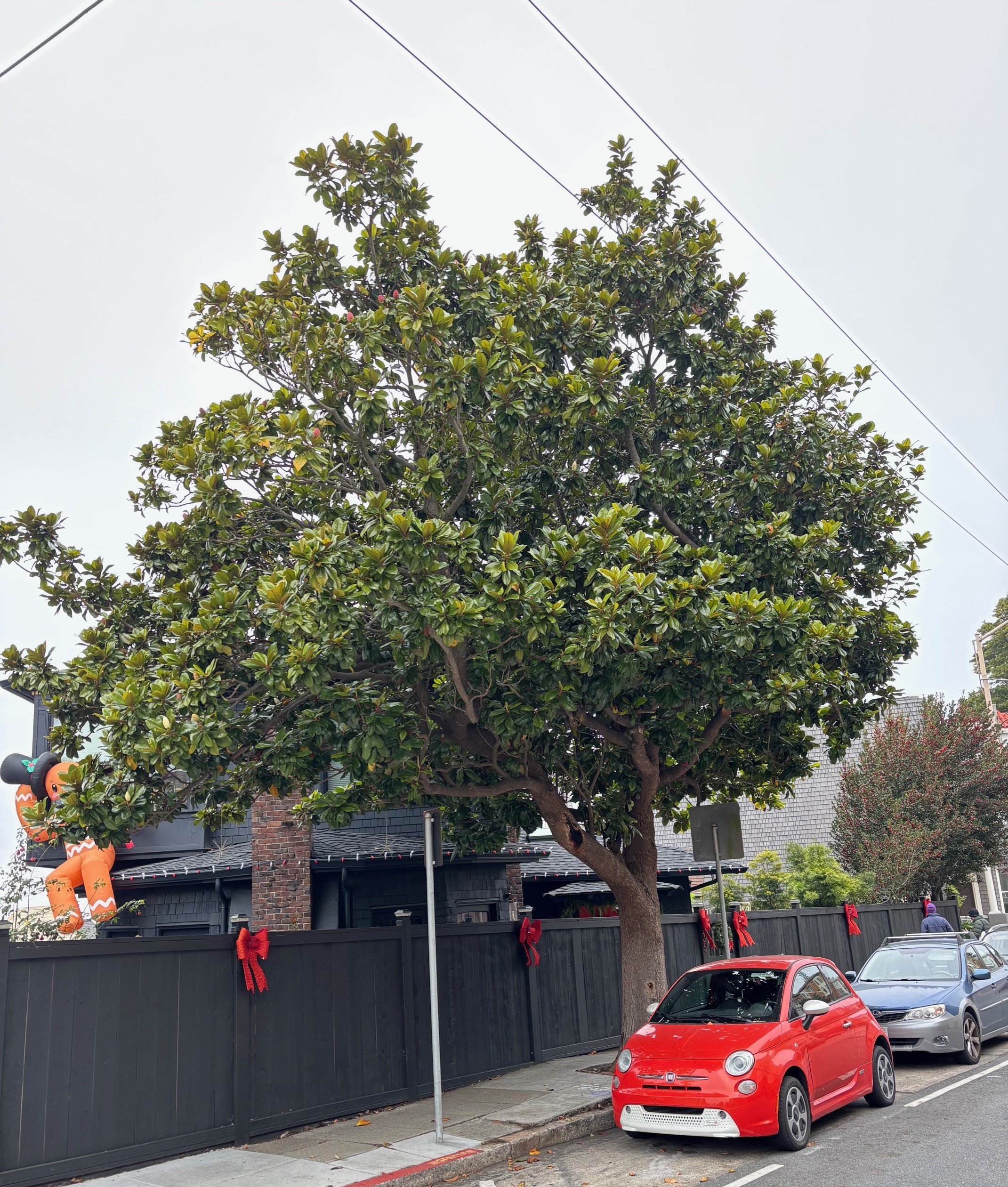
Southern magnolia (Magnolia grandiflora)
5. 1035 Ashbury Southern magnolia (Magnolia grandiflora), SE USA
6. 1035 Ashbury Hybrid holly (Ilex x altaclarensis), nursery origin (note the heavy fruiting and the slender leaves with few teeth)
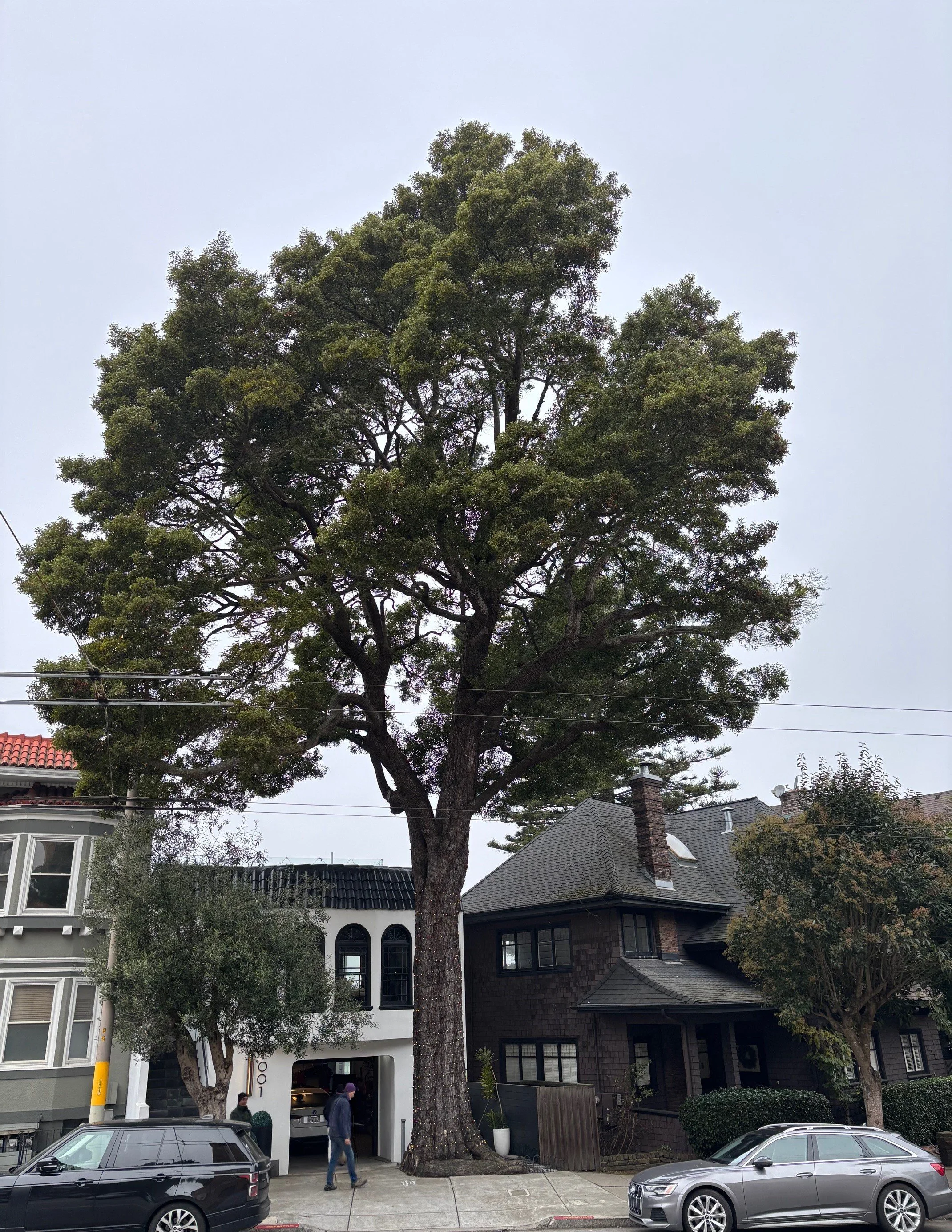
Blackwood acacia (Acacia melanoxylon)
7. 1001 Ashbury Blackwood acacia (Acacia melanoxylon), SE Australia (a particularly large specimen)
8. 979 Ashbury Carob (Ceratonia siliqua), E Mediterranean Basin (there are 2 trees here and several others along today’s walk; seed pods can be used to make a chocolate substitute—though not recommended for true chocolate lovers)
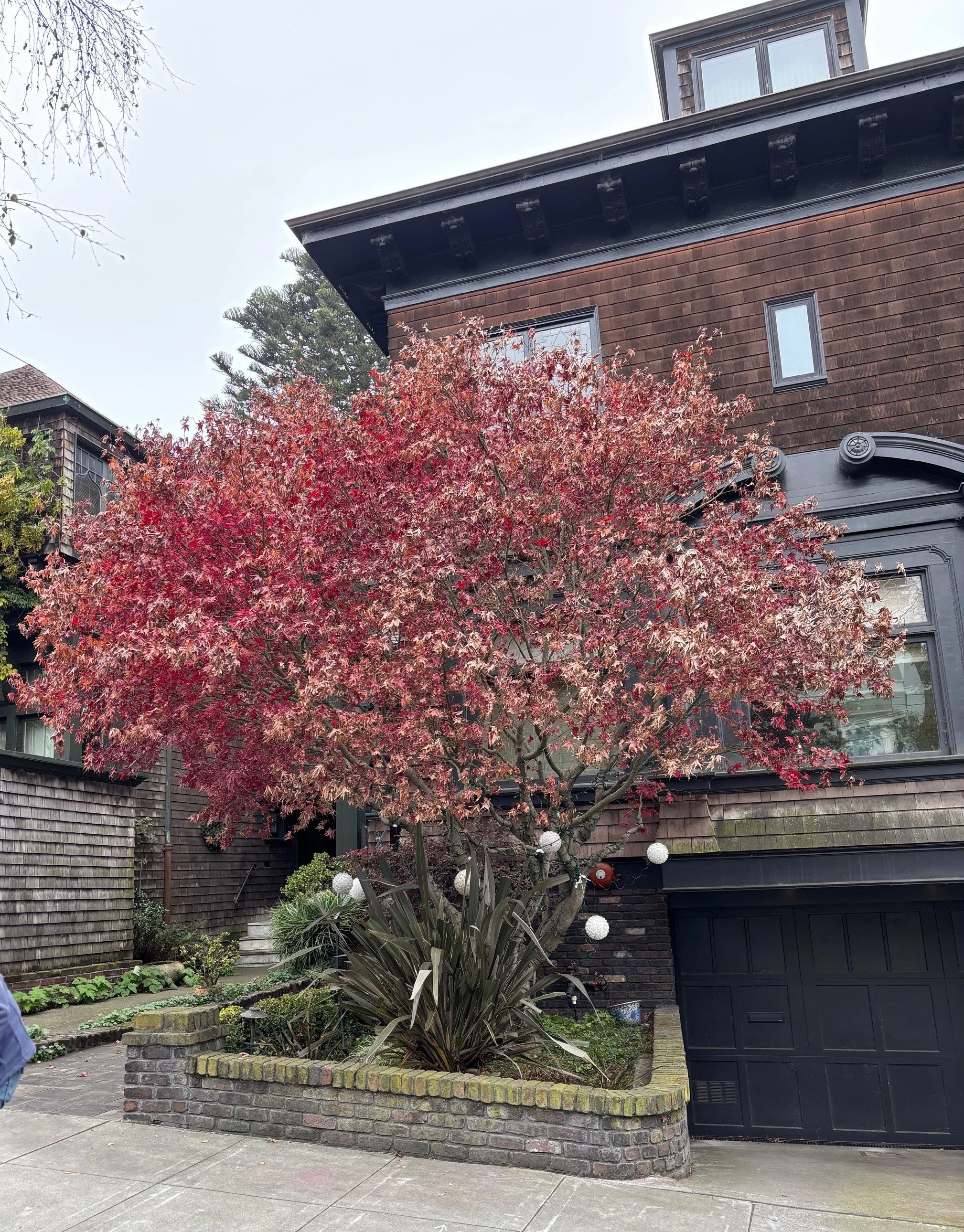
Japanese maple (Acer palmatum),
9. 959 Ashbury Japanese maple (Acer palmatum), Japan, China, Korea (a shapely specimen)
10. 959 Ashbury European weeping birch (Betula pendula), Eurasia & N Africa (not usually well-adapted to SF)
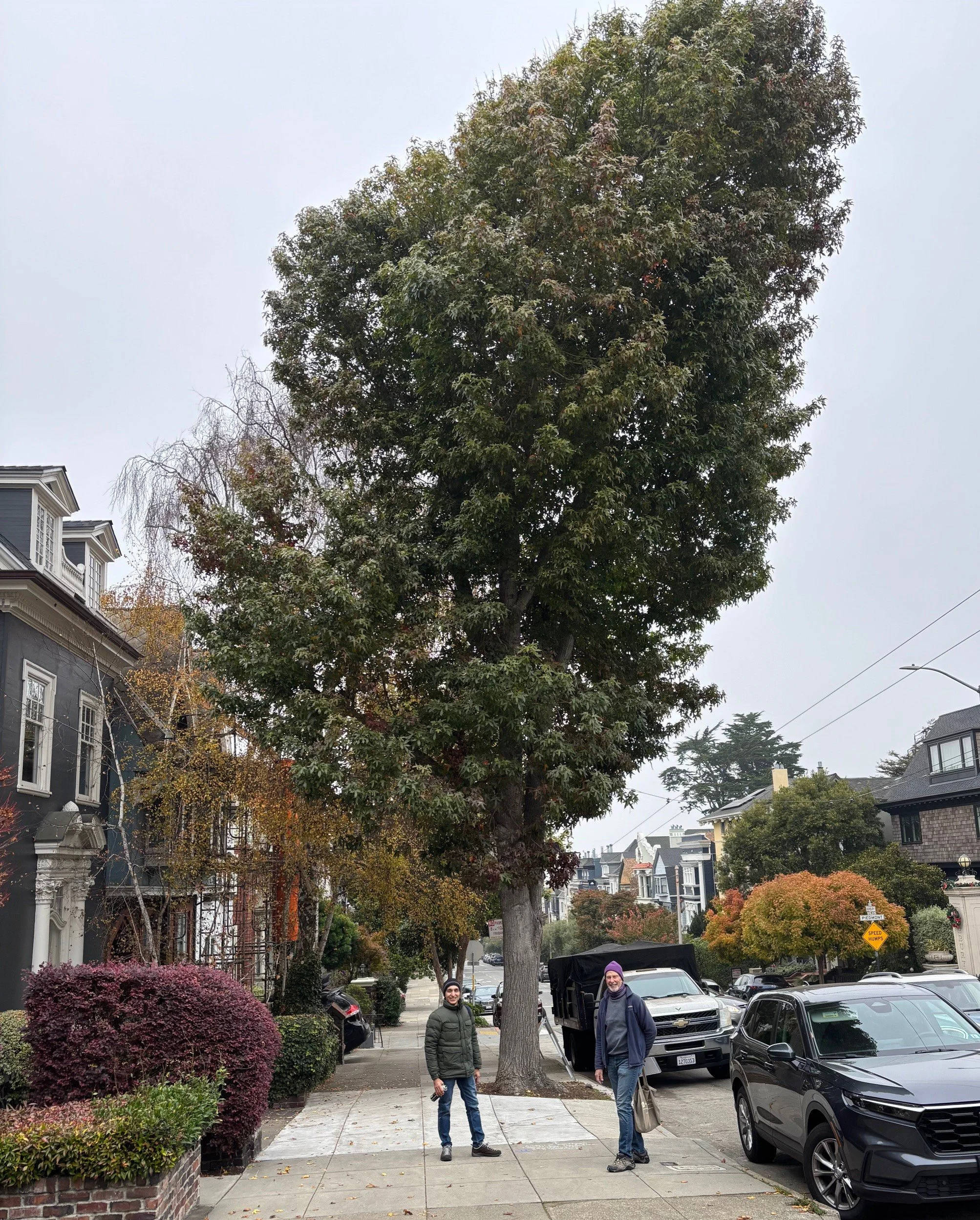
Sweetgum (Liquidambar styraciflua)
11. 943 Ashbury Sweetgum (Liquidambar styraciflua), E USA to Mexico & Central America
12. 935 Ashbury European weeping birch (Betula pendula), Eurasia & N Africa (this specimen is one of the largest in the city)
***Cross Ashbury at the Stop Sign***
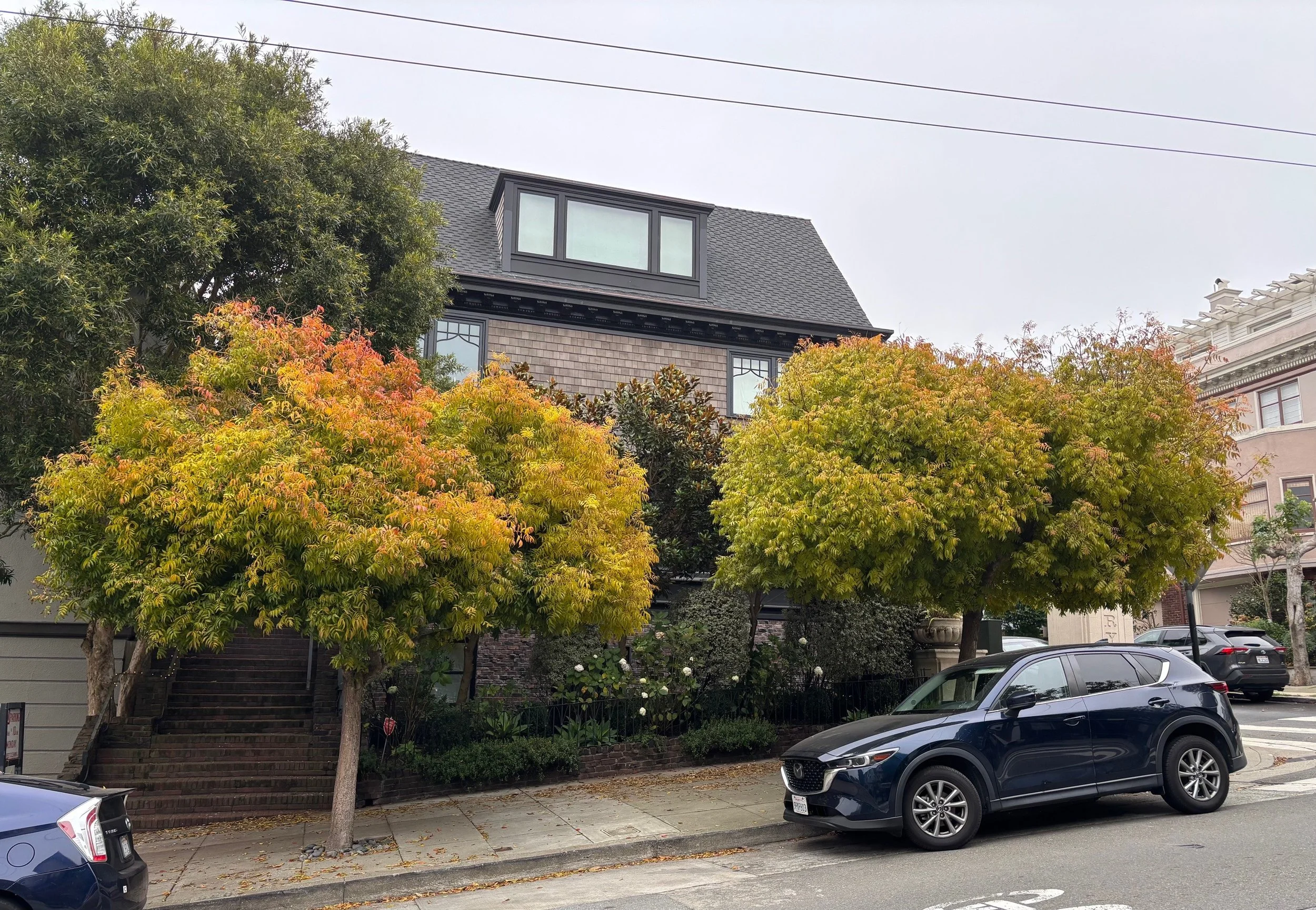
Chinese pistache (Pistacia chinensis)
13. 920 Ashbury Chinese pistache (Pistacia chinensis), C China to Philippines (becoming more commonly planted in SF, but best on the east side, since it prefers greater summer heat to develop its spectacular fall foliage colors)
14. 908 Ashbury Kwanzan flowering cherry (Prunus serrulata ‘Kwanzan’), Japan, E Asia (watch for the big pink flowers on this tree in April
15. 872 Ashbury Brazilian pepper tree (Schinus terebinthifolia), Brazil, Argentina, Paraguay
16. 870 Ashbury Monterey cypress (Hesperocyparis macrocarpa), Carmel, CA, native (this giant tree is at the end of the driveway, in the rear garden; one of the most widely planted conifers in coastal California)
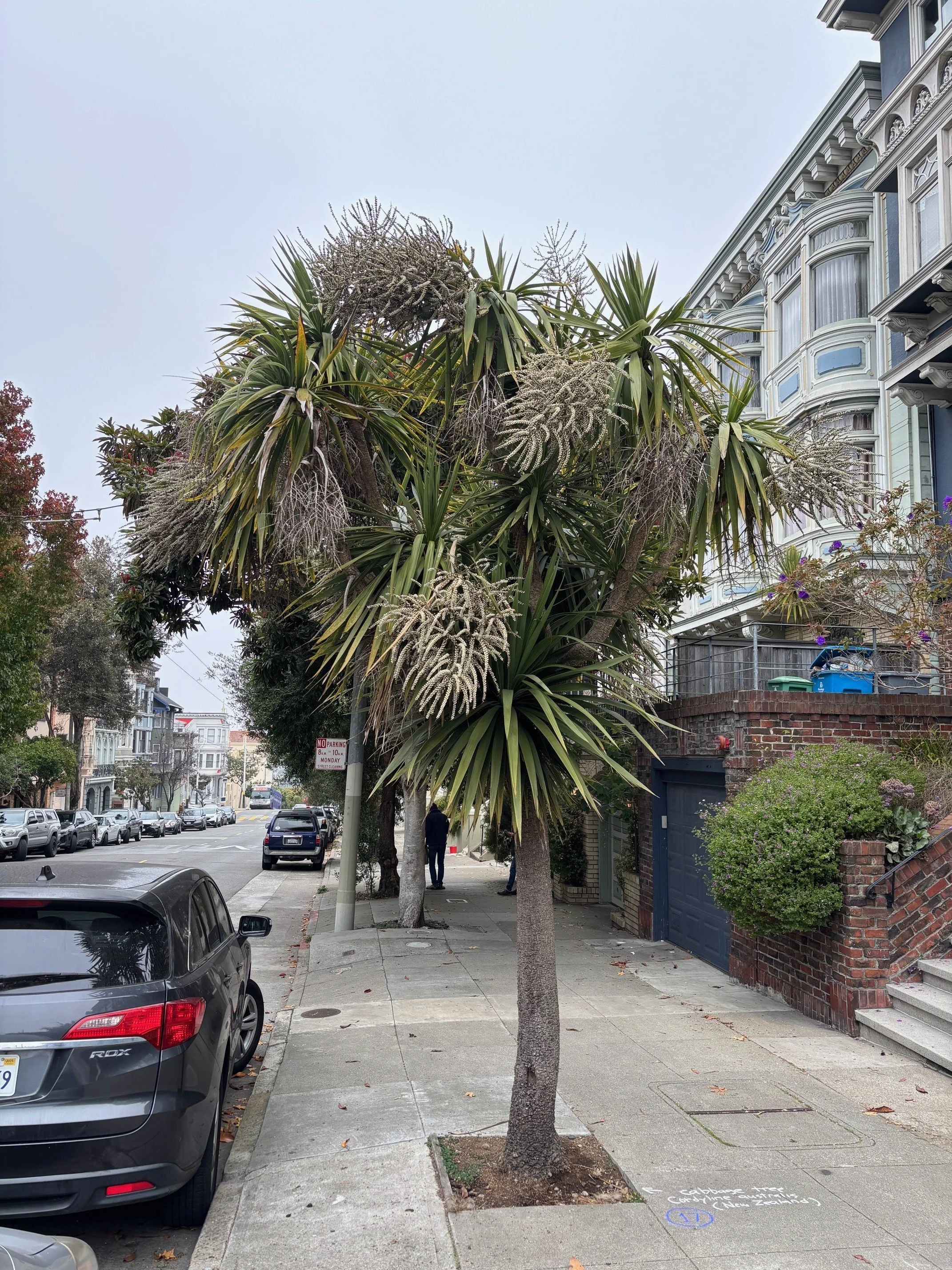
Cabbage tree or tī kōuka in Māori (Cordyline australis)
17. 864 Ashbury Cabbage tree or tī kōuka in Māori (Cordyline australis), New Zealand (note the heavy flowering)
18. 848 Ashbury Olives (Olea europaea), Mediterranean Basin (there are 2 trees here, with many more olives along today’s walk)
19. 833 Ashbury Brush cherry (Syzygium australe, formerly S. paniculatum), E Australia (this tall tree is across the street; note the small white flowers)
20. 205 Frederick Purple-leaf plums (Prunus cerasifera), Eurasia (4 trees in this block; many others in the ‘hood; pink flowers usually appear by February; formerly SF’s most planted street tree; usually without leaves through fall and winter)
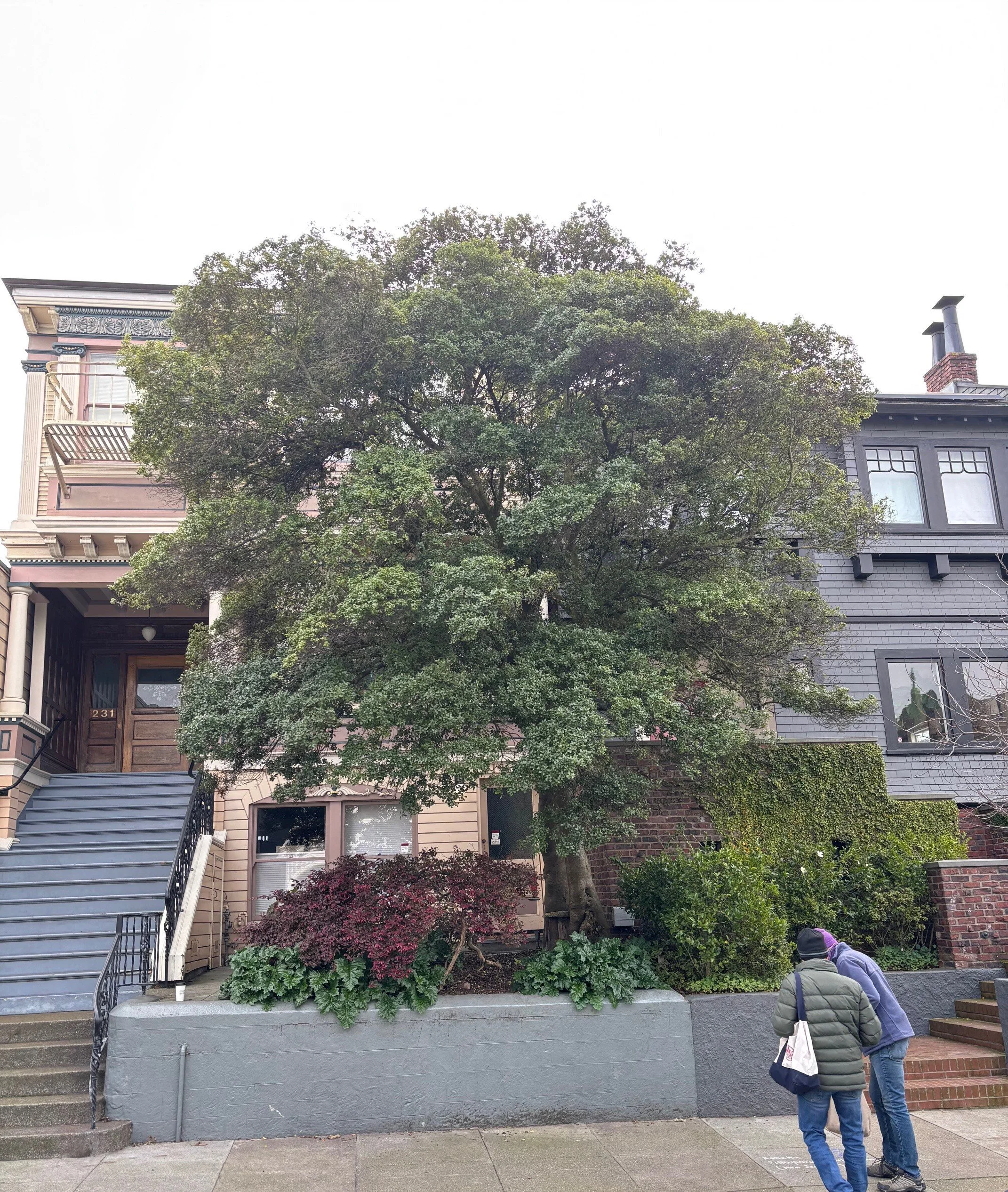
Kōhūhū or black pittosporum (Pittosporum tenuifolium)
21. 231 Frederick Kōhūhū or black pittosporum (Pittosporum tenuifolium), New Zealand
22. 251 Frederick Washington thorn (Crataegus phaenopyrum) E USA (note the red fruits)
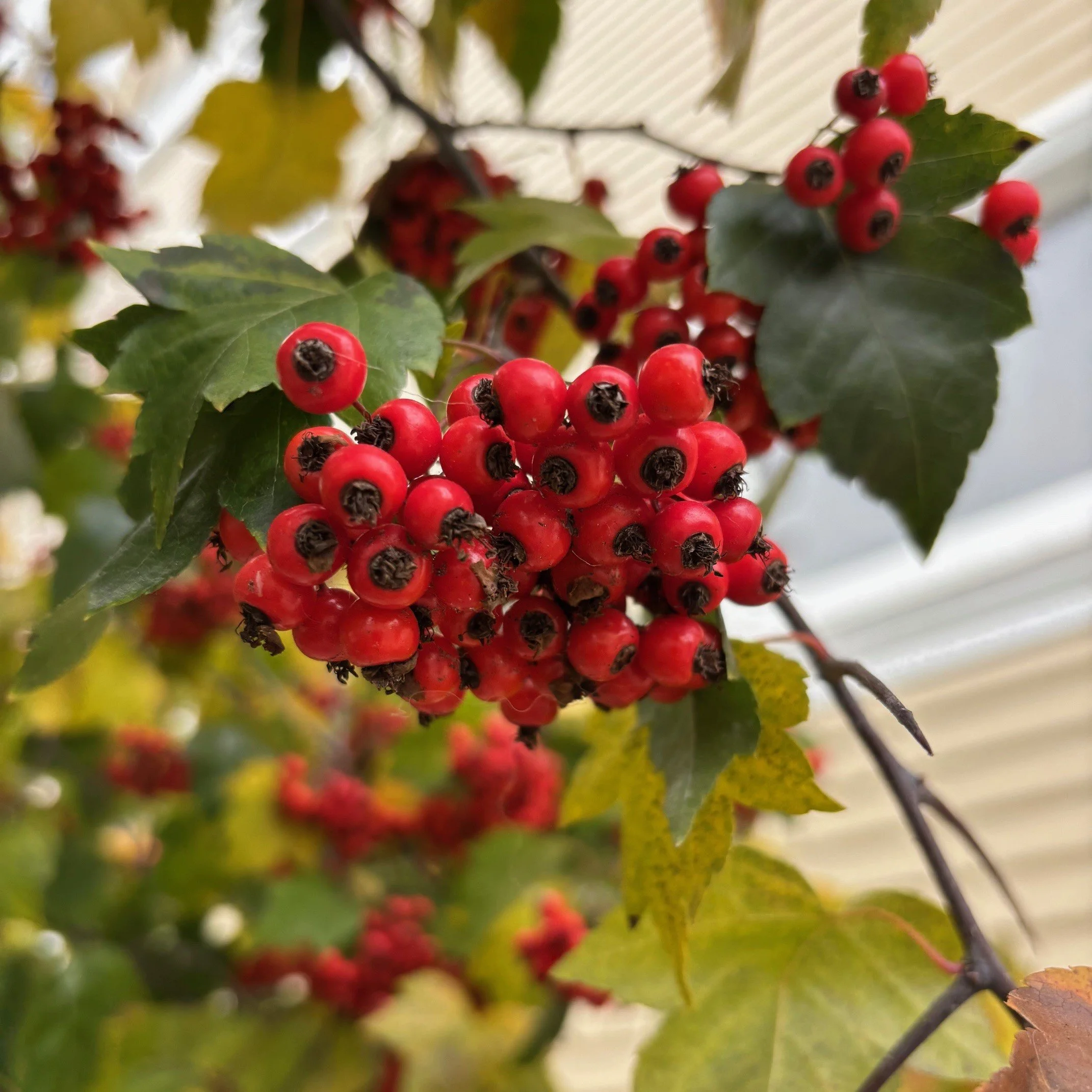
Washington thorn (Crataegus phaenopyrum)
23. 822 Clayton Mock-orange or tobira (Pittosporum tobira), Japan & Korea (clusters of intensely fragrant, white flowers in early spring; typically grown as a large shrub, this one is a handsome small tree)
24. 822 Clayton Red ironbark (Eucalyptus sideroxylon), E & SE Australia (note the dark, deeply fissured bark; red to pink flowers in spring)
25. 836 Clayton New Zealand tea tree (Leptospermum scoparium), New Zealand (a small tree with tiny dark green leaves and, in this cultivar, white flowers in winter and spring)
26. 838 Clayton Peruvian pepper tree (Schinus molle), Peru, Brazil, & Chile
27. 850 Clayton Loropetalum chinense, E Asia (typically grown as a shrub, this one has been beautifully pruned into a small tree)
28. 852 Clayton Victorian box (Pittosporum undulatum), E Australia ( common in the neighborhood; intensely fragrant white flowers cycle through the year, followed by sticky fruits, seen here on the sidewalk)
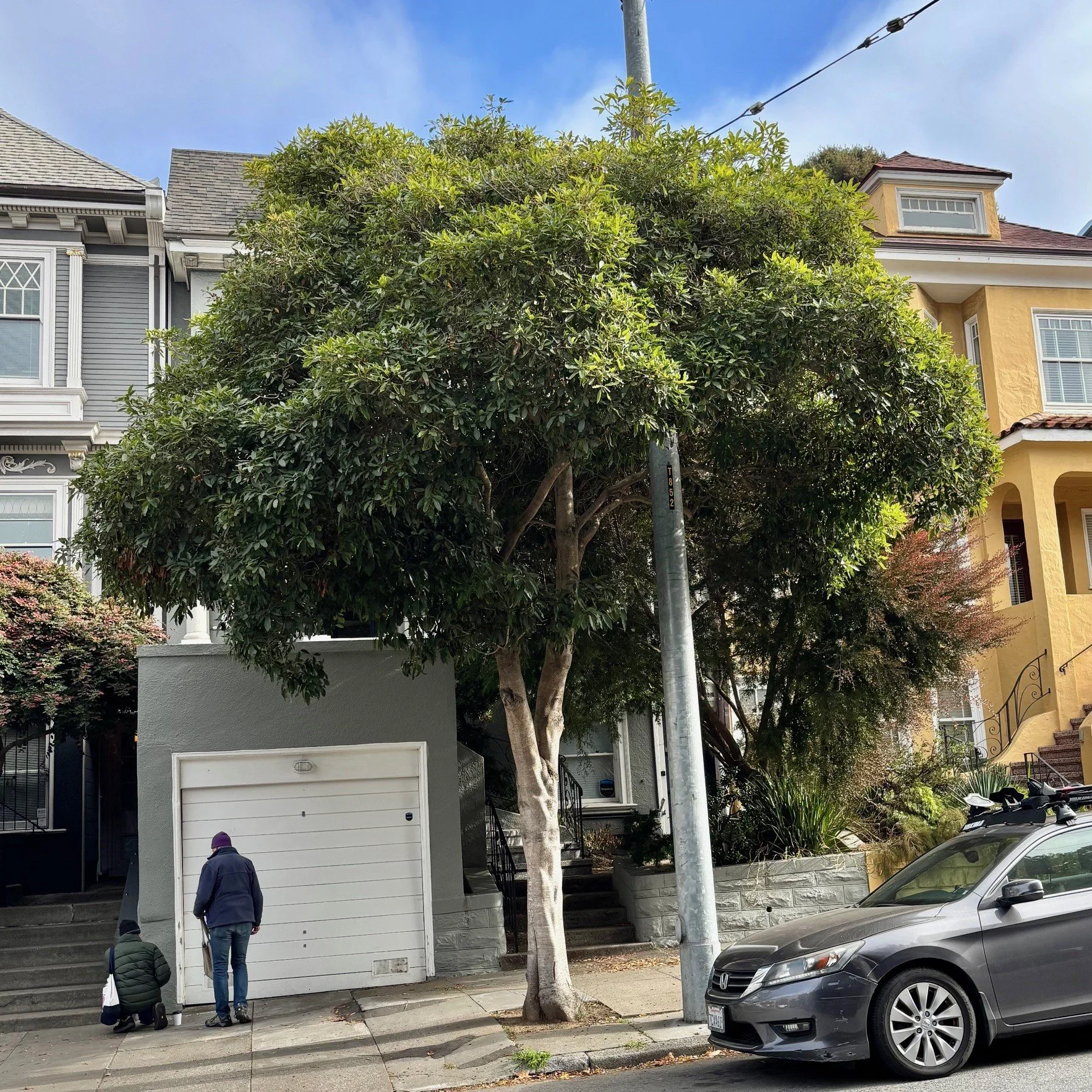
Victorian box (Pittosporum undulatum)
29. 852 Clayton Dark Shadows tea tree (Leptospermum ‘Dark Shadows’), Australia
30. 893 Clayton Two trees across the street:
Northern rātā (Metrosideros robusta), N & S Island, New Zealand (tree on the left; less commonly seen in SF than the other species of Metrosideros; note the smaller, shinier leaves)
New Zealand Christmas tree, pōhutukawa in Māori (Metrosideros excelsa), New Zealand (tree on the right; this tree flowers most reliably in the summer months, which would be Christmas time in NZ, south of the equator)
31. 872 Clayton Chinese elm (Ulmus parvifolia), China, Korea, Japan, and Vietnam
32. 907 Clayton Ginkgo (Ginkgo biloba), China (in full fall color across the street; this distinctive deciduous tree is the last of an ancient lineage of Gymnosperms)
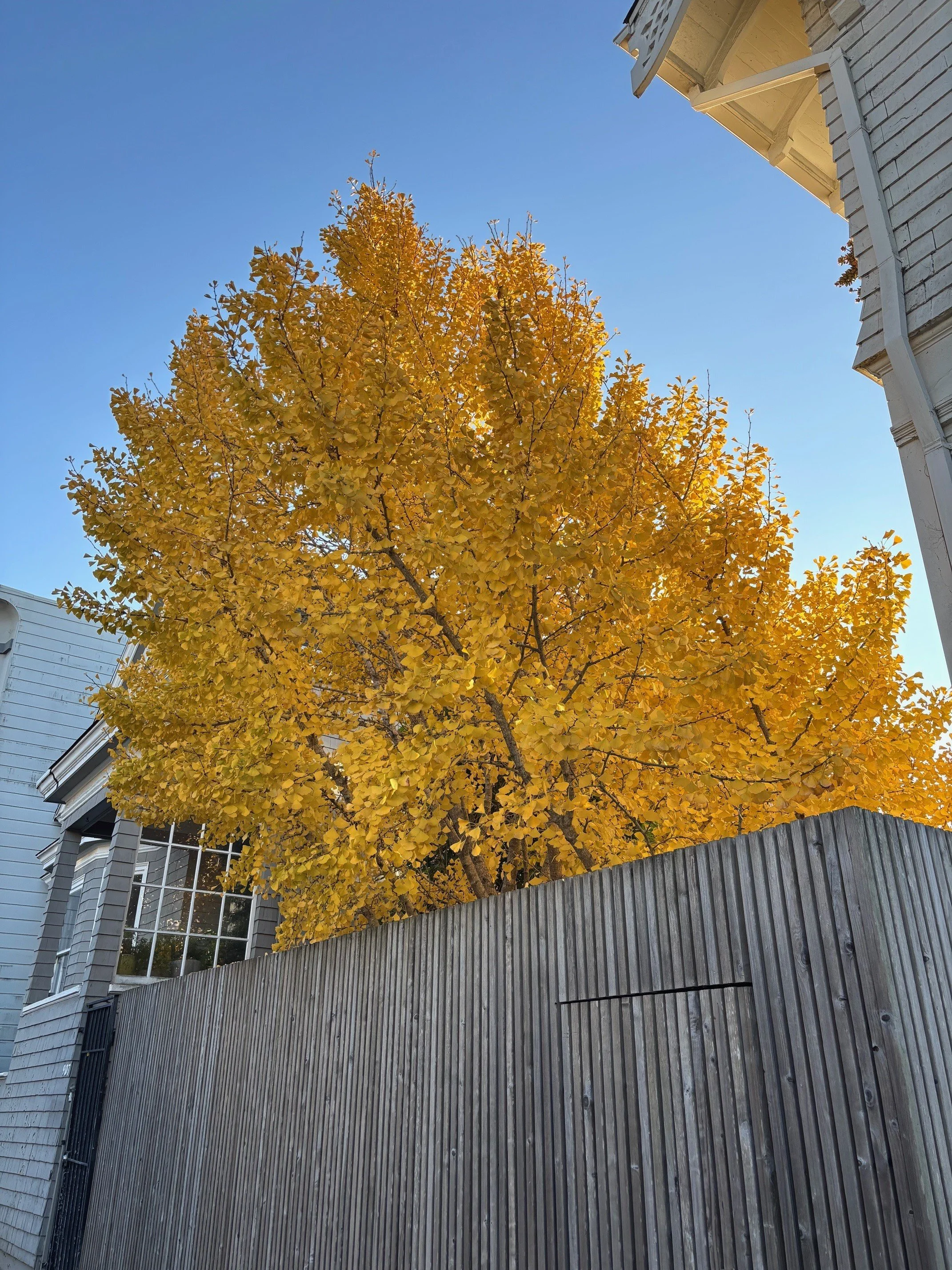
Ginkgo (Ginkgo biloba)
33. 924 Clayton Raywood ash (Fraxinus angustifolia ‘Raywood’), C & S Europe, NW Africa, SW Asia (a selected seedling found in a S Australia garden)
34. 936 Clayton Bailey’s acacia (Acacia baileyana), E Australia (this is usually among the earliest flowering trees in SF, always beginning in January with fluffy bright yellow flowers)
35. 956 Clayton Bronze loquat (Eriobotrya deflexa, syn. Rhaphiolepis deflexa), S China and Vietnam (an exceptional specimen; distinctive for its bronzy new foliage; fruits are inedible)
36. 990 Clayton Champak (Magnolia champaca) S & SE Asia (small, magnolia-like flowers, appearing in summer and fall, are intensely fragrant)
37. 1000 Clayton Purple (or blue) potato bush (Lycianthes rantonnetii), Paraguay (typically a large shrub, this one has been trained into a tree-like form; flowers are produced all year)
38. 1000 Clayton London plane tree (Platanus x hispanica), hybrid of E USA species and Mediterranean species (this deciduous tree is among the most commonly planted trees in cities around the world)
39. 1025 Clayton Deodar cedar (Cedrus deodara), Himalaya (across the street)
40. 1060 Clayton Lemon bottlebrush (Callistemon citrinus), E Australia (two trees against the house; scarlet flowers much of the year)
The tour ends here, a few dozen steps from its beginning farther up the hill at Clayton and 17th.
Our regular commercial: This walking tour was organized by Mike Sullivan, author of The Trees of San Francisco and webmaster of www.sftrees.com; Jason Dewees, horticulturist at Flora Grubb Gardens and author of Designing with Palms; Richard Turner, retired editor of Pacific Horticulture magazine and Sairus Patel, soon to be author of Trees of Stanford. You can follow Mike and Jason on their tree-themed Instagram pages at @sftreeguy and @loulufan. Richard edited another great book on San Francisco trees: Elizabeth McClintock’s Trees of Golden Gate Park. If you’re a tree enthusiast, buy all four of these books!